Why Sled Hockey (now para ice hockey) History Matters
The history of sled hockey is one of resilience, creativity, and an unshakable love for the game. Long before it became a marquee event at the Paralympic Winter Games. Sledge hockey was born out of a simple but powerful idea: that a disability should never stop someone from playing the sport they love.
From a rehabilitation center in Stockholm to sold-out arenas at the Paralympics, sledge hockey has grown from a local experiment into a global sport with passionate fans, elite athletes, and an incredible legacy. Yet its story is still under-told — a narrative filled with pioneers who refused to accept limitations, built leagues from nothing, and changed what hockey looks like forever.
This is the story of how sledge hockey began, how it grew, and how it continues to thrive today.
EARLIEST ORIGINS: STOCKHOLM, 1960s
Sledge hockey was invented in Sweden in the early 1960s. A group of people with physical disabilities at the Nyboda rehabilitation center in Stockholm wanted to find a way to play hockey. They couldn’t skate in the traditional sense, so they came up with an ingenious solution — a sledge with two skate blades mounted underneath, and two short sticks with metal picks on one end and a blade on the other.
The picks allowed players to push themselves across the ice. And overall control the sled, while the blade end was used to handle and shoot the puck. It was simple, creative, and it worked. Within a few years, the idea had spread to other parts of Sweden, and the country’s first sled hockey clubs began to form.
These early players faced the same kind of dismissal and skepticism that women’s hockey players dealt with during the same era. People questioned whether it was a “real” sport. But the athletes kept playing, kept improving, and kept proving the doubters wrong.
The Sport Spreads to Norway and Great Britain
By the late 1960s and into the 1970s, sled hockey had crossed Sweden’s borders. Norway and Great Britain both developed programs, and informal games between national teams began taking place. There were no official governing bodies yet, no standardized rules, and no major tournaments — just passionate players who loved the game and wanted to compete.
This grassroots growth mirrors what happened in women’s hockey during the same period. Small clubs, community rinks, and university programs were the backbone of early sled hockey, long before international federations took notice.

DEVELOPMENT AND FORMALIZATION (1980s)
The 1980s were a turning point for sled hockey. Grassroots programs expanded, particularly in Scandinavia, and the sport began to look more like the structured, competitive game we know today.
Sweden Hosts the First International Tournament
In 1981, Sweden organized the first international sled hockey tournament, bringing together teams from several European countries. It wasn’t an official world championship — the IIHF wouldn’t formally recognize the sport for years — but it was a huge moment. For the first time, national teams were competing in a structured format, with referees, proper rinks, and real stakes.
The tournament proved that sled hockey could deliver the same drama and excitement as any other form of the game. It also helped establish a shared rulebook, which was badly needed as the sport continued to grow.
North America Discovers Sled Hockey
Meanwhile, across the Atlantic, sled hockey was just beginning to take root in Canada and the United States. The sport arrived in North America in the late 1980s, when Canadian and American disability sports organizations started experimenting with the Swedish model.
Early programs were small and locally run, often connected to rehabilitation hospitals and adaptive sports centers. But the athletes who found their way to sled hockey took to it immediately. In the United States, the first sled hockey team was established in the early 1990s, just in time for the sport to explode onto the international stage.
THE PARALYMPIC DEBUT: LILLEHAMMER 1994
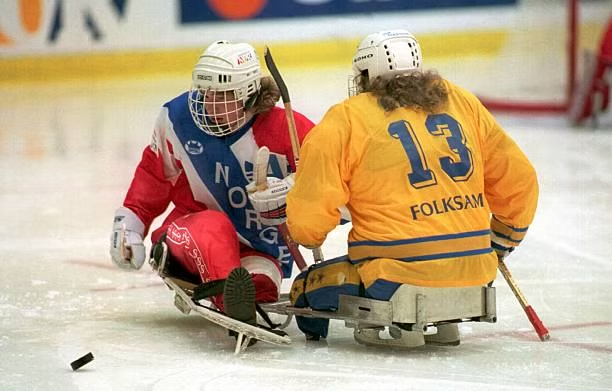
The biggest moment in sled hockey history came at the 1994 Lillehammer Winter Paralympics in Norway. Sled hockey made its official Paralympic debut, and for the first time, the world got to see the sport on a truly global stage. Sweden won the first-ever Paralympic gold medal in the sport, defeating Norway in the final.
The impact was immediate. Coverage of the Paralympic Games gave sled hockey visibility it had never had before. Young people with disabilities saw elite athletes competing at the highest level and realized that path was open to them too. Programs began popping up faster, funding increased, and the sport’s profile grew rapidly.
The Paralympic debut did for sled hockey what the 1998 Winter Olympics did for women’s hockey. It introduced the sport to millions of people who had never seen it before, and it changed the game forever.
THE RISE OF THE UNITED STATES AND CANADA
Team USA Becomes a Powerhouse
After the 1994 Paralympics, the United States invested heavily in building a competitive sled hockey program. USA Hockey developed a formal structure with regional leagues, national camps, and an elite national team.
The results were remarkable. Team USA won its first Paralympic gold medal at the 2002 Salt Lake City Winter Games, defeating Canada in the final. That victory sparked a dynasty. The Americans went on to win gold at the 2006, 2010, and 2014 Paralympics as well, establishing themselves as the most dominant team in the sport’s history.
to read more about team USA click here.

Canada Builds Its Own Program
Canada wasn’t going to sit back and let the Americans take over a hockey competition. Hockey Canada developed a strong sled hockey program through the 2000s, and the rivalry between the two countries became one of the defining storylines of every Paralympic tournament. Just like in the men’s and women’s Olympic hockey rivalries, USA vs Canada in sled hockey means everything.
to read more about team Canada click here.

GROWTH IN LEAGUES AND INTERNATIONAL COMPETITION
The World Sled Hockey Challenge
In 1996, Canada launched the World Sled Hockey Challenge — an annual international tournament that gave national teams a regular competition outside of the Paralympics. Countries like Japan, South Korea, Italy, and the Czech Republic began investing seriously in their programs as a result.
IIHF Recognition and Formal Governance
The International Ice Hockey Federation officially added para ice hockey to its umbrella in the 1990s, which brought structure, standardized rules, and greater legitimacy to the sport. The IIHF now oversees world championships at multiple levels, including Under-18 divisions, helping grow the sport’s talent pipeline globally.
Domestic Leagues in the United States and Canada
At the grassroots level, domestic leagues expanded significantly through the 2000s and 2010s. In the United States, regional sled hockey associations operate in dozens of states, and many NHL arenas host sled hockey programs. The NHL and NHL Players Association have been active supporters of the sport, donating equipment, ice time, and resources to help grow participation at the youth level.
MEMORABLE MOMENTS AND GAMES
Sled hockey has produced some of the most dramatic moments in Paralympic history.
The 2010 Vancouver Paralympics gold medal game between the United States and Japan is widely considered one of the greatest sled hockey games ever played. The Americans won, but Japan pushed them to the absolute limit — demonstrating just how far the global game had come from its Swedish rehabilitation rink origins.
The 2018 PyeongChang Paralympics delivered another unforgettable chapter. The United States and Canada met in the gold medal game, with the Americans winning 2–1 in overtime. The drama of that finish — decided in extra time, with everything on the line — was the kind of moment that casual sports fans remember for years.

CHALLENGES, BARRIERS, AND EQUITY EFFORTS
Equipment Costs
A custom sled hockey sled can cost anywhere from $1,000 to $3,000 or more. For families and athletes who are already managing the financial realities of disability, that price tag is a massive barrier. Many programs rely on donated or shared equipment just to keep players on the ice.
Ice Time and Visibility
Despite support from some NHL teams and arenas, many sled hockey programs still struggle to secure regular ice time. Media coverage remains limited as well — outside of Paralympic years, sled hockey rarely gets mainstream attention, which makes it harder to attract sponsors and grow the fan base.
Global Gaps in Access
In many parts of the world, sled hockey simply doesn’t exist yet. Developing countries that are just beginning to build traditional hockey programs are even further behind when it comes to adaptive versions. The IIHF and International Paralympic Committee have made growing global participation a priority, but there is still a long way to go.
THE FUTURE OF SLED HOCKEY
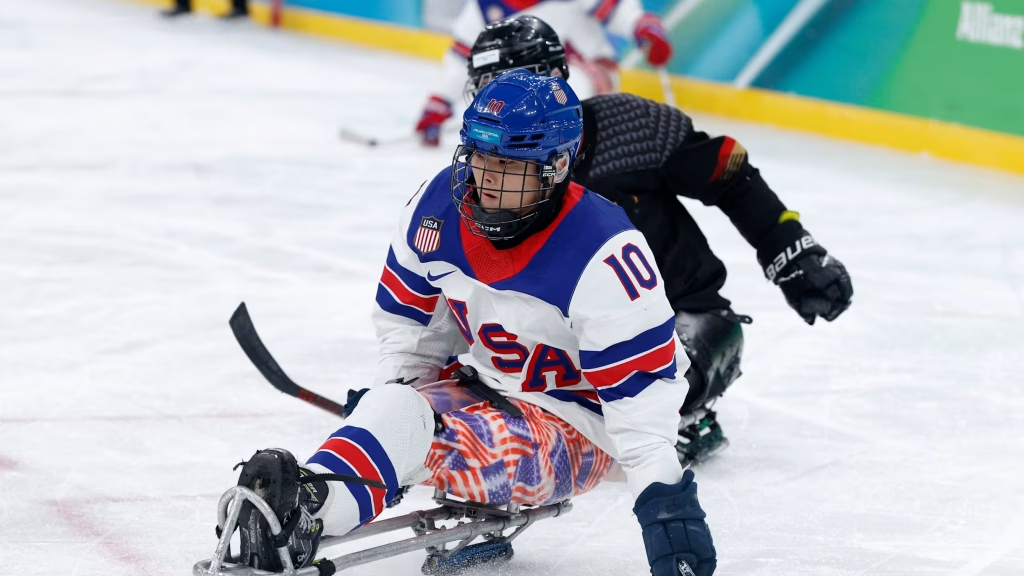
More than 30 countries now have active sled hockey programs. The Paralympic Games continue to showcase elite competition every four years, and the profile of the sport grows with every Games. Nations like South Korea, Slovakia, and the Netherlands are rapidly improving, challenging the traditional dominance of the United States and Canada.
Technology is also playing a role in the sport’s evolution. Sled design has become more advanced, with custom-fitted equipment that improves speed, maneuverability, and player safety.
What comes next? Expect continued investment in youth development programs, potential expansion of professional or semi-professional leagues, and deeper integration with mainstream hockey organizations. Most importantly, sled hockey’s future will be shaped by the athletes themselves — the players who get on the ice every day and refuse to let anything stop them from playing the sport they love.
CONCLUSION: HONORING THE PAST, SHAPING THE FUTURE
From a small rehabilitation rink in 1960s Stockholm to sold-out Paralympic arenas, sled hockey has traveled an extraordinary path. It is a story defined by persistence, progress, and pride — a testament to athletes who refused to be told the game wasn’t for them.
As sled hockey gains the recognition it deserves, its future will be built on the legacy of those pioneers who first strapped into a sled, grabbed two short sticks, and figured out a way to play. The sport belongs to all of them. And it belongs to every player who laces up — or rather, buckles in — today.